
ਇਹ ਲੇਖ ਪੰਜਾਬੀ ਵਿੱਚ ਪੜ੍ਹੋ (Google Translate)
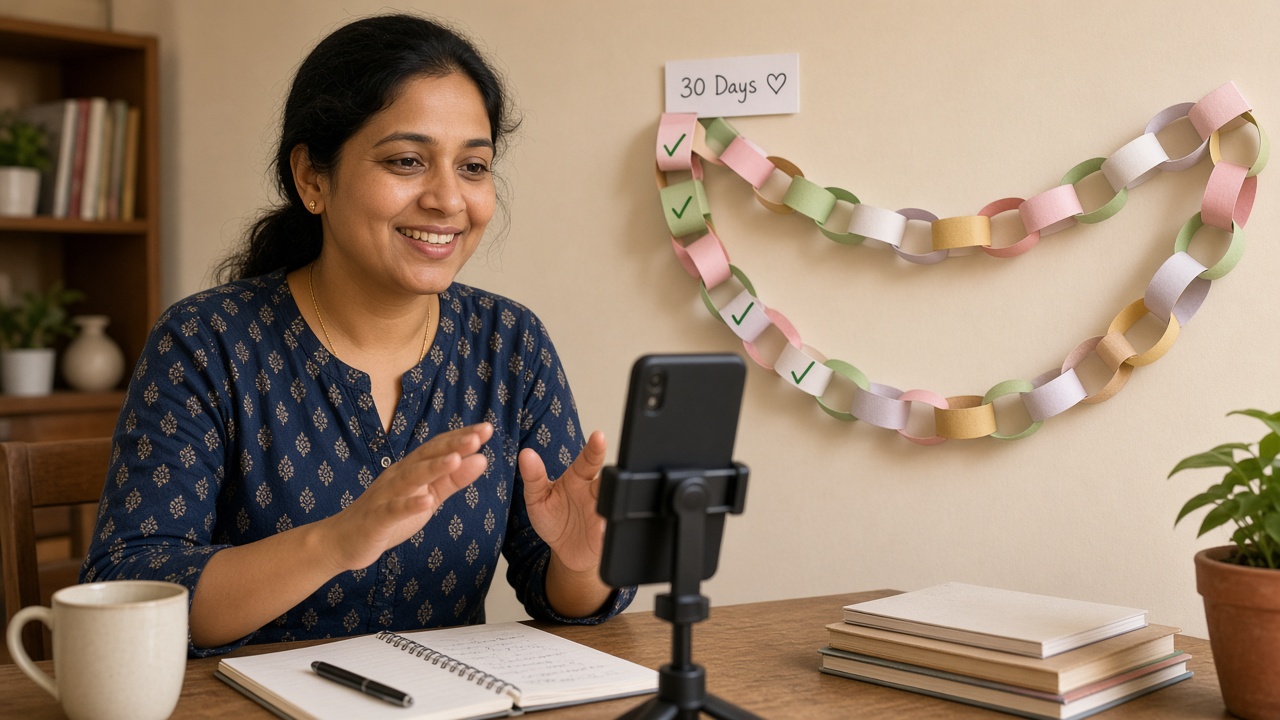
Beginners do not need a 400-page grammar book in week one. They need to say sentences about their day, hear themselves, and repair a few patterns. This 30-day plan is what we give new Spoken English learners who can read a little but barely speak.
You will not finish as a news anchor. You will finish with thirty recordings. That is the point. Extra prompts: English Speaking Practice.
Daily block (20–25 minutes)
- 5 minutes: name what you can see (present continuous).
- 8 minutes: one topic, two-minute talk, twice.
- 5 minutes: repair five sentences.
- 5 minutes: shadow a short clip or class audio.
Week themes
Week 1: home and routine. Week 2: people and places. Week 3: work or study. Week 4: opinions (“I prefer… because…”). Grammar: one rule from our ten speaking rules each week – not ten rules a day.
Frames to memorise with your mouth
- I am a… / I live in… / I work in…
- Every day I… / Yesterday I… / Tomorrow I am going to…
- I like… because… / I don’t like… because…
- Can you…? / Could you repeat that, please?
What not to do
Do not collect ten apps. Do not skip speaking because pronunciation is imperfect. Do not sit an IELTS/PTE mock as a beginner “level test” – we do not sell a fake official level certificate. When two-minute talks exist, then look at English Mock Test if you have an exam goal.
Days you will want to quit
Day 6, when the voice on the recording sounds like a stranger. Day 14, when a neighbour asks why you are talking to a phone. Day 22, when the same tense error returns. Those days are the course. Put the recorder down, drink water, do the five-minute shadow anyway. The folder of files is the certificate that matters this month.
If you miss four days, do not restart at day 1 for drama. Restart at the next number. Beginners love theatrical restarts. We prefer day 19 on day 19.
Family and homework
Ask one person to hear a one-minute talk on Sunday. Give them a job: “Did I use yesterday correctly?” One job. A family committee of critics will end the 30 days early. Spoken English class already supplies a trained critic.
A seven-day speaking log (keep it ugly)
Conversation improves when you can point at files, not at intentions. Create a folder on your phone named this week’s date. Each day add one recording, even if it is ninety seconds.
- Mon: routine (present simple).
- Tue: yesterday (past simple).
- Wed: a person you met.
- Thu: an opinion with “because” and an example.
- Fri: shadow 90 seconds of clear audio, then a one-minute talk on the same topic.
- Sat: longer two-minute talk; repair five sentences.
- Sun: listen to Monday vs Saturday. Circle one grammar leak. That leak is next week’s rule.
Bring one file to Spoken English class. Ask for five repairs, not “was it good?” If you cannot attend, send nothing – still do the folder. Fluency is retrieval at home. Class is pressure and correction. Grammar lessons and vocabulary pages on this site support the folder; they do not replace it. When two-minute talks are stable for ten days, you may look at an IELTS or PTE mock. Until then, a mock is an expensive way to learn that you still translate every sentence. We will not pretend a beginner recording is an official English level certificate.
Families: one listener, one job (“Did she use yesterday correctly?”). A committee of six critics will end the week. Put the recorder away if a fight starts; return after tea. The point is a year of speech, not a perfect Sunday.
Day 1
Record: “My name is… I live in… Every day I…” for one minute. Repair. Repeat. That is day 1. Put the file in a folder called 30-days.
Next step. Join a live batch: Spoken English Course. Grammar support: English Grammar Lessons.
Frequently asked questions
I am shy. Can I wait until I am ready?
Readiness comes from the recordings. Start quietly at home. Class will push you further.
Hindi explanations?
We may explain a rule in Hindi/Punjabi in class, then you still must produce English sentences.
Will I get a certificate after 30 days?
This plan is practice, not an official CEFR exam. Ask counselling about course completion documents if you need paperwork for an employer.
Kids and adults?
This plan is written for adult beginners. Younger learners need shorter bursts and a parent or teacher beside them.